Bringing CEDAW closer to the Pacific: Tuvalu’s experience
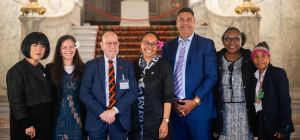
27 December 2025Tuvalu made history at the April 2025 CEDAW Technical Cooperation Session in Fiji, with Prime Minister Feleti Teo leading the delegation in a rare opening address and showcasing the nation’s growing leadership in advancing women’s rights. This milestone event not only strengthened Tuvalu’s confidence and capacity in treaty reporting but also elevated civil society voices, setting a powerful example for other small island nations navigating gender equality and climate justice.
Tuvalu played a significant and multifaceted role in the Technical Cooperation Session on the Convention on the Elimination of All Forms of Discrimination Against Women (CEDAW) held in Suva, Fiji, from 7 to 11 April 2025. Tuvalu was one of three Pacific nations (alongside Fiji and Solomon Islands) selected for country exchanges with the full CEDAW Committee. Prime Minister Feleti Teo led the Tuvaluan delegation and delivered the opening statement at the CEDAW session – marking a historic and rare moment in the Committee’s history as it is uncommon for a head of state to open a CEDAW session.
For the Government of Tuvalu, participation in this dialogue was an empowering milestone. For most members of the delegation, including Permanent Secretaries, Directors of Social Welfare and Gender Affairs, the Deputy Secretary of Health, Crown Counsel, and the High Commissioner to Fiji, it was their first time taking part in such a process. Although there had been apprehension beforehand, the experience strengthened their confidence and deepened their understanding of how gender equality intersects with their own fields of work. For Attorney General Laingane Italeli Talia, it was not the first time for her to attend a CEDAW session however having it in the Pacific made it extra special.
“It has always been Geneva, which made it really sound bureaucratic and intimidating to delegations. In my experience that was what I felt the first time I attended Tuvalu’s CEDAW review in Geneva. Having it in the Pacific and closer to home really had an impact on the way the dialogue was carried out. Overall, in my view it really served its purpose and gave that sense of having a more frank and constructive dialogue – story telling rather than a classroom-based kind of situation.” – Attorney General Laingane Italeli Talia
This experience has empowered the Director of Social Welfare, for example, to now lead Tuvalu’s Convention on the Rights for Persons with Disability (CRPD) reporting process in 2025, as valuable insight from observing how the CEDAW review was conducted was gained.
Brigitte Leduc, Gender Equality and Social Inclusion Adviser at Government of Tuvalu, Gender Affairs Division (GAD) and the Pacific Community (SPC) played a significant role in guiding Tuvalu through the preparation and presentation of its combined 5th and 6th CEDAW State report as well as provided technical support throughout the constructive dialogue.
“At the CEDAW Session, the constructive dialogue itself was a five-hour session during which the Tuvalu delegation performed strongly. The Committee praised the delegation for being well coordinated and confident in engaging with questions. The Attorney General, who was participating for the second time, led the technical team with assurance, setting a steady tone that encouraged newer members to contribute. The constructive dialogue was not only a reporting exercise but also a learning opportunity, enabling delegates to build new knowledge and confidence while demonstrating Tuvalu’s progress under CEDAW.” – Brigitte Leduc
Central to this milestone for Tuvalu, was the leadership of Fatu Lei Association, who led the coordination of Tuvalu’s CEDAW Shadow Report – a vital civil society contribution that complements the government’s official report and holds the state accountable to its commitments under the Convention. With technical and financial support from SPC, Fatu Lei – also known as Tuvalu Women for Change – stepped into a leadership role, coordinating five NGOs and a local consultant to develop and submit the shadow report. This marked a significant shift in Tuvalu’s reporting process: from fragmented NGO inputs to a unified, coordinated civil society voice.
At the heart of this transformation was Filiga Taukiei Nelu, a lawyer and passionate advocate for women’s rights. As Fatu Lei’s founder and secretary, Filiga brought her dual experience in government and civil society to bridge gaps, build trust, and ensure grassroots realities were reflected in the report. Her leadership enabled inclusive participation from women, youth, and people with disabilities, and strengthened collaboration with GAD on the state report.
The shadow reporting process became more than a technical exercise – it was a catalyst for change. It built the capacity of Fatu Lei and partner NGOs to understand treaty obligations, analyse state commitments, and engage directly with the CEDAW Committee. For Filiga, the process deepened her understanding of how policy gaps translate into lived experiences, especially in efforts to end violence against women and girls.
“With my previous role in government, I used the CEDAW reporting process as the means to understand the laws and policies and the gaps. However, through the same process but joining with other NGOs I see how both progress and challenges impacts women on the ground and we cannot do the work in isolation” – Filiga Taukiei Nelu
During its session with Tuvalu, the CEDAW Committee acknowledged Tuvalu’s unique challenges as a low-lying island nation facing existential threats from climate change and its disproportionate impact on women and girls. The CEDAW Committee praised Tuvaluan women’s leadership in climate advocacy and addressing gender-based violence and emphasised the need for stronger protections for women and girls, especially in remote areas.
By engaging directly with the full CEDAW Committee, Tuvalu amplified its voice on the international stage, potentially influencing future treaty body practices to be more inclusive of remote and climate-vulnerable nations. Tuvalu’s engagement has also highlighted how women in small island developing states are not just vulnerable to climate change but are also leading action. The CEDAW Committee provided context-specific recommendations that Tuvalu can now use to guide legal and policy reforms – especially around constitutional protections and gender-based violence.