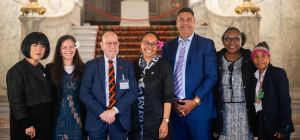
Empowering women, enabling leadership: Disability inclusion in action
27 December 2025Women with disability face compounded barriers to education, employment, and leadership opportunities. To address these challenges, the Tonga Australia Support Platform (TASP) tailored internships to build professional skills and leadership capacities for women with disability.
In Tonga, people with disabilities face limited opportunities due to many societal and physical barriers that keeps them in low-income streams. According to Rhema Misa, Director of Lavame’a Ta’e’iloa Disability Association (LATA), these barriers often begin at home, where limited access to education and employment opportunities is a significant challenge. The lack of reasonable accommodation in schools, workplaces and essential services further restricts participation. Societal influences, such as family, community and religious expectations also impact self-esteem and create additional challenges in accessing education and employment. Misconceptions persist, often perceiving people with disability as dependent on handouts. As a result, some individuals with disability feel trapped in a cycle of reliance rather than being encouraged to pursue careers.
Recognising the need for greater inclusion, the Tonga Australia Support Platform (TASP) created entry points for people with disability in the corporate sector. In collaboration with Organisations for People with Disabilities (OPDs), TASP invited three OPDs to nominate candidates for an internship opportunity. Through this opportunity, LATA successfully placed its candidate as the successful intern. Over three months, Kalisi Fe’ao worked four days a week at TASP office and one day at the LATA office. The internship was customised to provide specialised training in finance, office administration and computer literacy.
Misa explained that the internship focused on areas where employment is required by organisations. In Tonga, many jobs don’t require formal education but rely on skills and experiences. Finance was chosen as a key area because it is one of the most in demand professions across all organisations. Additionally, LATA itself does not have a full-time Finance Officer, making this a practical opportunity for the intern. To support accessibility, reasonable accommodation was considered, such as wide doors, ramps and adjustable office furniture, ensuring a more inclusive workspace. She noted that the accessible office setup significantly enhanced her experience, and her trainer, Mele Tavake, highlighted her steady growth in using technology tools throughout the program.
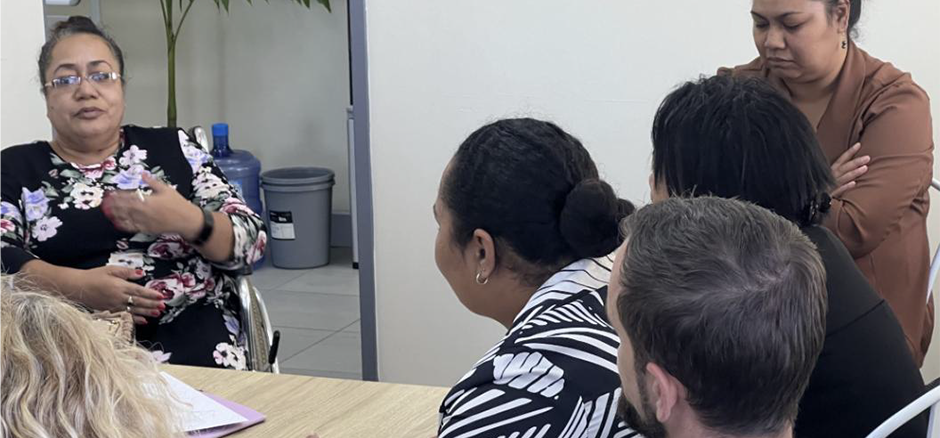
Kalisi had the opportunity to attend various human resource and skills trainings, workshops, infrastructure assessments, and social related dialogue programs boosting her social network interaction with various organisations. During her internship, Kalisi’s exposure in the civil society space attracted interests from various organisations seeking a disability focal point to enhance inclusivity in their operations. As a result, she received offers for work attachment opportunities from two additional civil society organisations in addition to her engagement with LATA. Following her internship, Kalisi is now continuing her work with LATA as a Community Liaison Officer and an intern at Ma’a Famili mo Fafine (MFF) as a Disability Inclusive focal point. She has enrolled at the University of the South Pacific (Tonga Campus) to pursue a degree in Community Development Studies, reigniting an academic journey she put on hold 30 years ago.
“After the internship, I’m proud to talk about it and even my family they would say – you’re very lucky that the Australian Government chose you to upskill your knowledge. The internship that I took was way too advanced than what I expected. For any person with disability or just about anyone who did not reach tertiary education or did not have an opportunity to pursue professional work. This [the internship] was a great blessing comparing the level where I was to TASP’s staff. It’s a huge, big upskill for myself…many [organisations and individuals] have approached me after my presentations and said they have seen a great difference in the way I carry myself now than before. I told them – I cannot express it, as it stays in my heart and mind. Because of the internship, I am motivated to progress further, and I’m inspired to do something new, it turns out I can still do these things.” – Kalisi Fe’ao