Integrating family life education and family planning services
27 December 2025In Pohnpei, Dr Diana is quietly transforming lives by bringing compassionate, rights-based family planning services to women and girls in even the most remote communities. With training and support from UNFPA Pacific, she is helping bridge gaps in education, access, and cultural barriers, one conversation at a time.
Sunlight filters through the window of Dr Diana’s small office at the Pohnpei State Primary Health Care Division. She meticulously organises her medical supplies, preparing for a trip to an outer island health centre. Suddenly, the phone rings. It’s a client, on her way in for a family planning consultation. A quick change of plans, and Dr Diana’s focus shifts.
Fifteen minutes later, a young mother of two, her youngest barely five-months old, sits nervously across from Dr Diana. The doctor’s calm demeanor and gentle explanations put the woman at ease. They discuss the family planning procedure in detail, Dr Diana patiently answering every question.
“I have two children, two-years- old and five-months-old, and I want to have a gap for the next birth. The doctor has been very helpful in providing me information about Jadelle,” said Leona Panuelo. Jadelle is a long-acting reversible contraceptive implant with a high effectiveness (99.9%) for the prevention of unintended pregnancies.
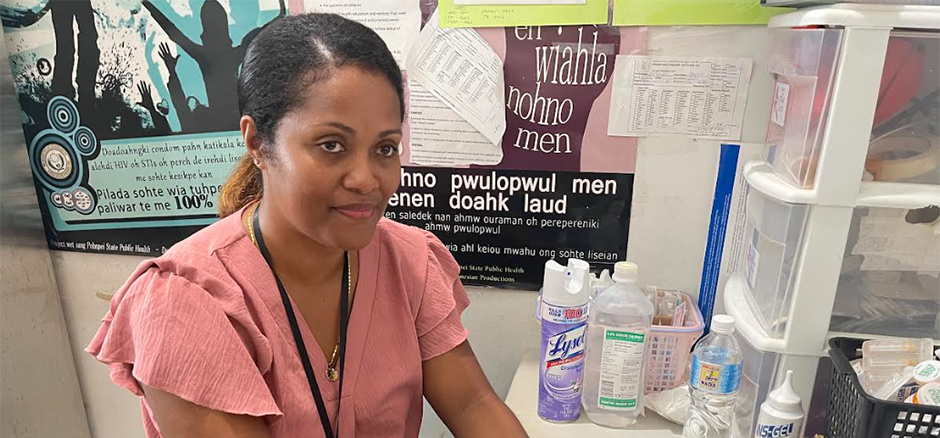
Dr Diana has been working as a family planning and maternal and newborn care specialist at the Pohnpei State Primary Healthcare Division for two years. Her schedule is packed – Mondays, Tuesdays, and Fridays are dedicated to family planning services. But for clients traveling from distant places, like today’s patient, she makes time whenever needed.
The work is rewarding, but also challenging. Last year, 21 teenage pregnancies were reported in Pohnpei, a sobering statistic in a community of fewer than 36,000 residents. The root cause, she believes, is a lack of awareness. While Family Life Education (FLE) classes in schools offer a starting point, Dr Diana sees a critical gap. “FLE classes are a good entry point,” she explains, “but we need to connect the FLE with family planning services. Therefore, coordination between the Department of Health and the Department of Education is important.”
Another hurdle is parental consent. For teenagers who seek family planning services, parental refusal can block their access. Navigating these cultural sensitivities within the traditional communities requires a delicate and informed approach. Dr. Diana understands the complexities. She knows that change won’t happen overnight, but every conversation, every piece of information shared is a step forward.
In the Federated States of Micronesia (FSM), UNFPA Pacific with funding from the Australian Government is supporting several initiatives to improve sexual and reproductive health services with a focus on reducing unmet need for family planning. This includes support for family life education in schools, family planning training for health workers, and supply of family planning commodities to the health centres.
Dr Diana was one among the 34 health workers who received UNFPA Pacific’s family planning training in FSM. This family planning training aims to empower healthcare providers to offer comprehensive, respectful family planning services. It emphasises a rights-based, client-focused approach, covering all contraceptive options (including long-acting reversible contraceptive LARCs), adolescent and youth friendly service provision, and accessible care for people with disability.
Back in her small office, Dr Diana reflects on the day. She knows the challenges are significant, but her dedication is unwavering. She is bridging the gap; empowering women and girls with critical information on sexual and reproductive health and shaping a healthier future for Pohnpei.