Solar skiff and shifting tides: A vessel for gender and climate justice
27 December 2025In the coastal village of Gaire in Central Province, Papua New Guinea, rests a 19-foot solar-powered vessel along its shoreline – a lightweight, silent, and entirely free of greenhouse gas emissions. But what it carries is more than people or supplies. It carries a legacy of change, a symbol of opportunity, and a bold challenge to the status quo.
At the helm of this change is the Kisere Women Cooperative Society (KWCS), a vibrant community-led group redefining what is possible at the intersection of climate action and gender equality, demonstrating that women’s leadership and low-carbon innovation can, and must, co-exist even in traditionally male-dominated maritime spaces.
The project: Gender-Responsive Climate Action in the Informal Shipping Sector: A Practical Demonstration supported by PWL at SPC through the FIT funding initiative, delivered more than a vessel. It built capacity, shifted social norms, and seeded a deeper sense of agency among the women of KWCS.
Over 45 women received Basic Sea Safety training, and 25 progressed to specialized training in solar-powered vessel operations. Among them, three were certified as vessel operators. At the forefront of this shift was Matilda Haoda, a fisherfolk’s daughter and now the lead operator of the vessel.
“Matilda went out of her way to learn and troubleshoot issues with the boat,” recalled Amelia Bola, SPC’s Maritime GHG Officer. “Her father is a traditional fisherfolk, and her husband was supportive throughout. It was like passing the torch.”
Despite weather-related setbacks delaying full vessel deployment, the progress lies in what has shifted within the community: mentorship, shared leadership, and confidence.
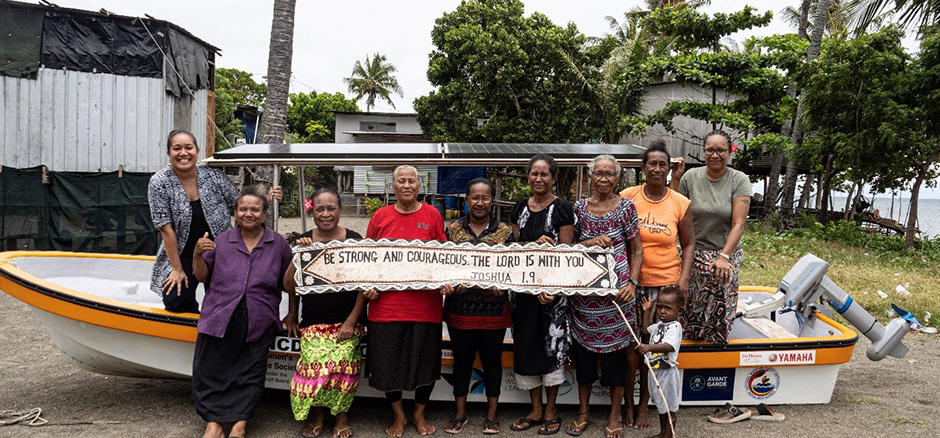
The women, without external prompting, established standard operating procedures for the vessel, an organic emergence of governance and collective responsibility. “Most of the changes we saw were internal,” Amelia reflected. “The women set their own processes, took ownership, and built each other’s capacity. Social empowerment was the strongest theme coming out.”
This wasn’t just about maritime greenhouse gas emissions reduction but became a space for innovation in how programs are designed with women at the centre.
Amelia, who brought lessons from earlier solar-boat pilots in Fiji, noted a fundamental pivot in approach. “In Fiji, we focused on measuring emissions reduction. In PNG, we focused on the women; finding a strong, active group already working on Women’s Economic Empowerment that could leverage this innovation.”
This deliberate shift laid the groundwork for a refined model one that prioritizes local agency, builds partnerships with national actors like PNG’s National Maritime Safety Authority (MNSA), and aligns with climate policies such as PNG’s Nationally Determined Contributions (NDCs).*
The Kisere Women Cooperative Society’s goal now is to train other women’s groups and scale this model across other communities. Equipped with manuals, knowledge, and lived experience, they are ready to lead.
For Amelia, the project also marked a personal shift in how she views project design and delivery.
“There was so much buy-in and expectations to succeed. But what I learned most is the value of building relationships not just outcomes. This helped me move from being linear to being transformative. FIT gave me the space to learn, to fail, and to grow and showed me what true ‘One SPC’ collaboration looks like.”
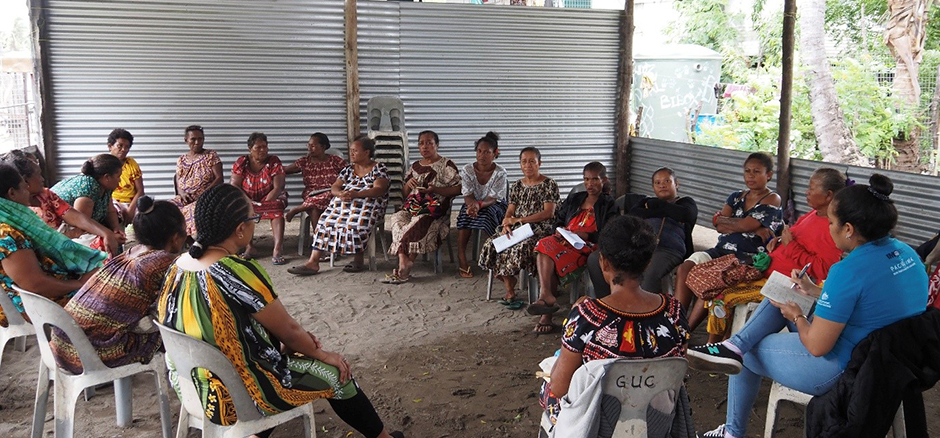
When asked what this vessel represents, Ms. Tahina Booth, Pacific Women Lead Board Member, shared:
“This vessel is not just a physical asset but a symbol of progress in gender equality, environmental sustainability, and community empowerment. Through the leadership of the women of Kisere, we are witnessing the transformational potential of this initiative.”
The Kisere Women Cooperative Society is already looking ahead to economic activities in eco-tourism, small-scale fishing, and community transport.
*NDCs provide a framework for countries to ensure climate action is built into every sector and are the primary mechanism for countries to coordinate efforts to lower emissions and protect citizens from the worst impacts of the climate crisis.